Bonjour
We arrived at the entrance to Havannah Passage, New Caledonia at first light on Sunday morning having had to motor since 2.30am to make the flood tide in the pass, as the wind had died out. We began the next 40 nautical miles of navigation through reef and island passages, arriving in Port Moselle to anchor at 14:40.
Since last Tuesday's post we sailed in beautiful sunny conditions with just our genoa set in the 20 plus knot winds through to Thursday morning when the winds began to moderate to around 15kn. We then set a double reefed main through to Friday midnight shaking out the reefs as the wind moderated further. We enjoyed watching the full moon rise and set each night. At first light on Saturday we exchanged the genoa for our 0.5oz code zero sail. The breeze continued to fade throughout Saturday and disappeared on Sunday at 02:30. At this point we started the engine and passed an outbound cargo ship heading to Vanuatu. We were able to shut down the engine at 09:00 Sunday in favour of the code zero and full main again. The sailing was enjoyable as we cruised past many anchorages and bays we hope to explore later. The lush tropical bush gave way to eroded multi coloured rock and soil hills and gullies, perhaps mined in the past for the rich deposits of nickel.
As we neared Noumea there were hundreds of sailing vessels out enjoying the good trade winds. They ranged from wind surfers through to super yachts. It was a great sight with sails billowing on the iridescent blue waters.
Today we went into town and visited the Immigration, Customs and Quarantine Offices to clear in. It was a nice, easy, welcoming and free procedure, so refreshing. After that we practiced our basic school grade French on the shopkeepers. We're glad most of them speak English!
We covered 678nm in 5 days and 8 hours on the passage from Fiji.
All is bien on board.
Kathy and Wayne
email is via our slow and limited* HF radio email system. * Limited by the atmospheric conditions and propagation of the ionosphere.
----------
radio email processed by SailMail
for information see: http://www.sailmail.com
Monday, 19 September 2016


Wednesday, 14 September 2016
At Sea, Day 2- Fiji to New Caledonia
On Monday afternoon we cleared out at the Port of Lautoka in Fiji and spent the rest of the afternoon working to windward towards the main shipping channel through the outer reef. After a vivid sunset we discovered we would have some moonlight for at least half the night. We gained the channel but discovered one of the lazy jack cords holding up our mainsail bag needed re-stitching and there was a ship about to enter the narrow channel, so we turned landward and decided to anchor in Momi Bay to sort things out. Momi Bay was really protected and qualified as an allowable anchorage being part of Veti Levu (anchorage is forbidden in the outer islands of Fiji once outbound customs clearance is granted). Besides it sounded and looked a bit rough out there with the breaking waves visible in the moonlight breaking on the outer reef. Thanks Emma for your comment confirming our suspicions.
At first on light Tuesday we departed Momi Bay, with full main and genoa in the now lighter conditions, thanks to the overnight decoupling of wind and sea surface. The sea was running at about 2.5 metres and the wind filled to the predicted 20 knots which had us reefing twice then stowing the main altogether by 10am. The conditions were a bit lumpy but with the wind just aft of beam on, it was comfortable enough.
We have now covered 200 miles at 1700 Wednesday, with another 435 sea miles to go to the entrance of Havannah Passage. Today has been overcast with passing showers. Everything is shades of grey out here.
All is well onboard as we settle into our Swedish watch system.
Kathy and Wayne
At 13/09/2016 7:07 AM (utc) our position was 19°23'S 174°07'E
email is via our slow and limited* HF radio email system. * Limited by the atmospheric conditions and propagation of the ionosphere.
----------
radio email processed by SailMail
for information see: http://www.sailmail.com
At first on light Tuesday we departed Momi Bay, with full main and genoa in the now lighter conditions, thanks to the overnight decoupling of wind and sea surface. The sea was running at about 2.5 metres and the wind filled to the predicted 20 knots which had us reefing twice then stowing the main altogether by 10am. The conditions were a bit lumpy but with the wind just aft of beam on, it was comfortable enough.
We have now covered 200 miles at 1700 Wednesday, with another 435 sea miles to go to the entrance of Havannah Passage. Today has been overcast with passing showers. Everything is shades of grey out here.
All is well onboard as we settle into our Swedish watch system.
Kathy and Wayne
At 13/09/2016 7:07 AM (utc) our position was 19°23'S 174°07'E
email is via our slow and limited* HF radio email system. * Limited by the atmospheric conditions and propagation of the ionosphere.
----------
radio email processed by SailMail
for information see: http://www.sailmail.com
Monday, 12 September 2016
Departing Fiji for New Caledonia
We have just cleared customs at Lautoka, Fiji and we have set all plain sail, working towards the main shipping channel entrance through the reefs of Fiji. We are expecting South East trade winds of up to 20 knots to help us on our way once we clear the outer reefs. We expect the voyage to take up to 7 days.
We hope you enjoyed the photos
All is well onboard
Kathy and Wayne
At 28/08/2016 5:35 AM (utc) our position was 17°39'S 177°21'E
email is via our slow and limited* HF radio email system. * Limited by the atmospheric conditions and propagation of the ionosphere.
----------
radio email processed by SailMail
for information see: http://www.sailmail.com
We hope you enjoyed the photos
All is well onboard
Kathy and Wayne
At 28/08/2016 5:35 AM (utc) our position was 17°39'S 177°21'E
email is via our slow and limited* HF radio email system. * Limited by the atmospheric conditions and propagation of the ionosphere.
----------
radio email processed by SailMail
for information see: http://www.sailmail.com
Thursday, 8 September 2016
Fiji Photos

On a mooring at Savusavu.

Kayaking at SavuSavu

Viani Bay Area, Vanua Levu

Vanua Levu

A villager grating coconut on Rambi Island.

Walking to town on Rambi Island. The lorry is the local bus.

An interesting sign in the grounds of a primary school.

A typical dug out canoe used by the people on Rambi Island.

A villager collects coconuts, dries the coconut meat on top of this oven and then sells it to the Copra Shed in town. Rambi Island

Making friends while waiting at the bus stop.

A Methodist Church in a village. Instead of a bell they bang the dug out pieces of tree under the shelter in front of the church.

We anchored off this village at Kia Island.

The view from the top of Kia Island.

Looking down at Ambler from the top of Kia Island.

A windy day on the island of Viti Levu. Note Wayne's newest lure...a toothpaste tube.
Tonga Photos

Kayaking around some islands near our anchorage at Nuku'alofa.

A typical day of exploring by kayak and snorkelling in Tonga.

Inside Swallow's Cave in Va'vau.

Terns resting on the sticks of a fish trap.

Wayne playing with the local crabs.

A glorious, sunny day of sailing in the Va'vau Group.

Terns
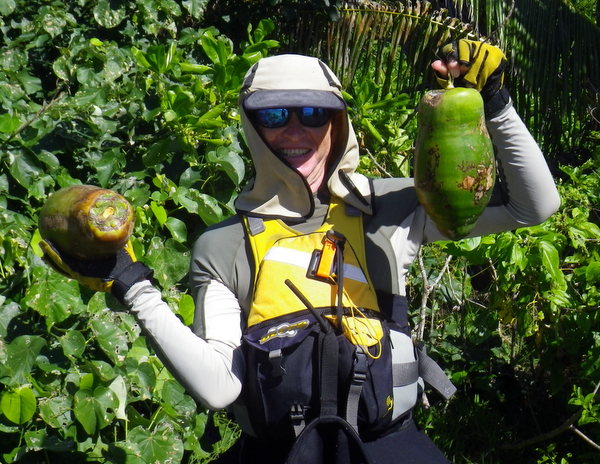
Coconut juice coming up.

The perfect conditions to practice our kayak rolls.

Terns

Kathy up the ratlines looking for coral bommies and reefs.

A beautiful uninhabited island in the Hapaai Group.
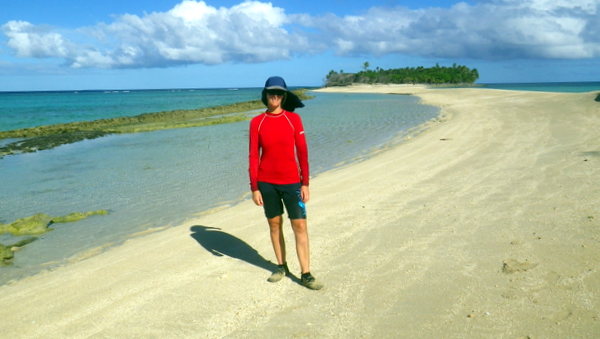
A beautiful uninhabited island in the Hapaai Group.
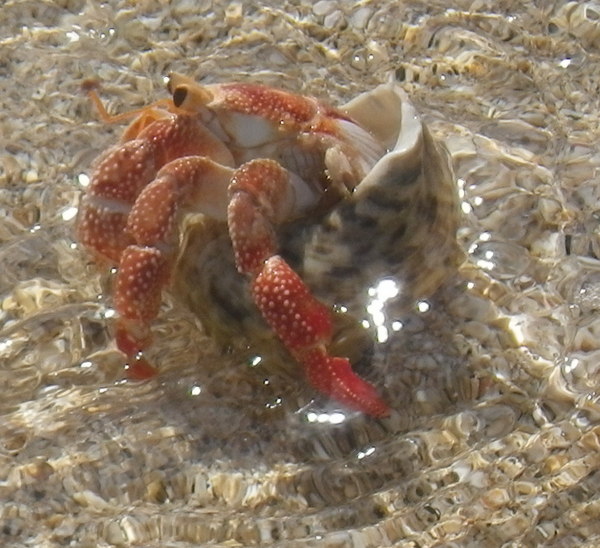
Hermit crabs of all sizes were abundant on the beaches in Tonga.

A perfect spot for a swim.

The windward side of an uninhabited island.
Wednesday, 10 August 2016
Cruising in Vava'u and Fiji
Since our last post a few moons ago, we spent another 12 days in the Ha'apai group of islands of Tonga. We weathered a blow one night where the winds gusted to about 40 knots, we had moved from Uiha Island, north to another island called Tatafa, as it looked one of the few places in the whole group to offer any shelter in the predicted Northerly pre-frontal winds. We were joined by 3 other yachts the next morning and heard of their tales of survival in other not so protected anchorages. One of these boats a forty footer, had previously lost their best anchor and managed to snag some coral after a number of resets, with an old half sized plough anchor. We lent them our spare, an original 60 pound CQR, until they could manage to import a new anchor.
We moved north to the town of Pangai where we had to check in and out with customs with an inter island clearance process. This duty was carried out first, then we had a hamburger at a cafe and witnessed a dog fight between about 10 really mangy, mostly emaciated mongrels - Ugh! We bought some eggs then high tailed it back to Ambler. We then headed 3nm further north to anchor and await a better wind angle for the passage to the next group of islands called Vava'u. Over the next 5 days we snorkeled and explored nearby by kayak and also practised our eskimo rolls and kayak rescue techniques in the 26 deg crystal clear waters.
We then had a pause in the strong North Easterly winds and set out North around noon, for the overnight passage to Nieafu in the Vava'u group. We actually stopped at another island called Haano around mid afternoon for a snorkel and dinner before nightfall. We deployed our "Code 0" in the light south easterlies and watched 2 other yachts motor out of sight ahead of us. After sunrise the next morning we spotted some whale spouts ahead and an island to the west called Late Island. Soon after some lower islands began to appear ahead of us. These grew higher and more plentiful during the day. Around midday we sailed into the impressive Vava'u Group with its deep waters and taller islands. By mid afternoon we anchored just short of Neiafu.
The next morning we weighed anchor and sailed into the harbour to anchor at its southern end. This was a really nice quiet protected anchorage away from the busy port. We launched the dinghy and motored the 20 minutes to town with our paperwork to do our inter island customs clearance again and we also had to renew our visas for another month at the immigration office. These duties done we then had a good walk around and checked out the shops and market. We had another day of wandering about town and provisioned with fresh fruit and vegetables.
After a couple of days we headed out to explore the many and various anchorages and usually snorkeled and kayaked before moving to the next anchorage for more of the same.
Some of the highlights were the Hunga Island Lagoon where we negotiated a narrow, shallow gap over a coral ledge between rocky islands. From this anchorage we paddled over a shallow pass into another stunning lagoon called the Blue Lagoon. Another beautiful area was reached by sailing through a coral pass into the Eastern group where we had the place to ourselves for a week. We anchored in a few different spots including the old port of Nieafu and kayaked many miles exploring the shoals and smaller islands where keel boats wouldn't dare to go. We moved to Kenutu Island where we met up with around 6 other boats. Here we kayaked some more, snorkeled and walked over the island to stand on the sheer limestone cliffs above the crashing South East trade wind driven swell.
We have since covered the 425nm passage from Tonga to Fiji last week, arriving in Savusavu. It was a great 77 hour passage in the tradewinds.
Savusavu was a great, friendly little town. The Fijian people are always ready with a warm smile and 'Bula'. We got away from the port after a week of indulgence of the good, really cheap curries on offer and we stocked up on fresh foods such as meat and vegies. The port has 3 so called marinas, 1 with a real marina as well as moorings called The Copra Shed, the other two just have moorings with showers etc. We stayed on a mooring with Waitui marina. Joelene the manager arranged and transported all officials to our boat. She was fantastic and extremely helpful and we highly recommend her.
We spent several nights anchored off Costeau Resort in Savusavu Bay waiting for the right wind to sail east. From here we had several kayak, snorkeling and walking adventures and enjoyed the company of some fellow yachties. A 15-20kn southerly breeze arrived and we had a fast and boisterous beam reach to Viani Bay 40nm east of Savusavu.
Viani Bay was a large bay with a few anchoring options. The surrounding hillsides reminded us of anchoring in Banks Peninsula in NZ. The hills were high with a mixture of jungly bush and bare grazing land. We spent 3 nights anchored there waiting for a trough to pass over. We had heavy downpours that allowed us to top up our water tanks and more as well as giving Ambler a good scrub down. One day we had a good explore in our kayaks. That day began as sunshine and ended in rain squalls. However we did discover a good snorkeling spot a few bays to the north while the sun was still out.
Today we sailed north to Kioa island with light winds and are now anchored in a bay on its north west corner. After anchoring we watched the rain slowly envelope the high mountain ranges of Vanua Levu to our west before arriving to give us another dousing.
We plan to continue anti clockwise around Vanua Levu and the islands to the east of it.
All is well on board.
At 7/08/2016 8:23 PM (utc) our position was 16°37.7'S 179°56.0'E
email is via our slow and limited* HF radio email system. * Limited by the atmospheric conditions and propagation of the ionosphere.
----------
radio email processed by SailMail
for information see: http://www.sailmail.com
We moved north to the town of Pangai where we had to check in and out with customs with an inter island clearance process. This duty was carried out first, then we had a hamburger at a cafe and witnessed a dog fight between about 10 really mangy, mostly emaciated mongrels - Ugh! We bought some eggs then high tailed it back to Ambler. We then headed 3nm further north to anchor and await a better wind angle for the passage to the next group of islands called Vava'u. Over the next 5 days we snorkeled and explored nearby by kayak and also practised our eskimo rolls and kayak rescue techniques in the 26 deg crystal clear waters.
We then had a pause in the strong North Easterly winds and set out North around noon, for the overnight passage to Nieafu in the Vava'u group. We actually stopped at another island called Haano around mid afternoon for a snorkel and dinner before nightfall. We deployed our "Code 0" in the light south easterlies and watched 2 other yachts motor out of sight ahead of us. After sunrise the next morning we spotted some whale spouts ahead and an island to the west called Late Island. Soon after some lower islands began to appear ahead of us. These grew higher and more plentiful during the day. Around midday we sailed into the impressive Vava'u Group with its deep waters and taller islands. By mid afternoon we anchored just short of Neiafu.
The next morning we weighed anchor and sailed into the harbour to anchor at its southern end. This was a really nice quiet protected anchorage away from the busy port. We launched the dinghy and motored the 20 minutes to town with our paperwork to do our inter island customs clearance again and we also had to renew our visas for another month at the immigration office. These duties done we then had a good walk around and checked out the shops and market. We had another day of wandering about town and provisioned with fresh fruit and vegetables.
After a couple of days we headed out to explore the many and various anchorages and usually snorkeled and kayaked before moving to the next anchorage for more of the same.
Some of the highlights were the Hunga Island Lagoon where we negotiated a narrow, shallow gap over a coral ledge between rocky islands. From this anchorage we paddled over a shallow pass into another stunning lagoon called the Blue Lagoon. Another beautiful area was reached by sailing through a coral pass into the Eastern group where we had the place to ourselves for a week. We anchored in a few different spots including the old port of Nieafu and kayaked many miles exploring the shoals and smaller islands where keel boats wouldn't dare to go. We moved to Kenutu Island where we met up with around 6 other boats. Here we kayaked some more, snorkeled and walked over the island to stand on the sheer limestone cliffs above the crashing South East trade wind driven swell.
We have since covered the 425nm passage from Tonga to Fiji last week, arriving in Savusavu. It was a great 77 hour passage in the tradewinds.
Savusavu was a great, friendly little town. The Fijian people are always ready with a warm smile and 'Bula'. We got away from the port after a week of indulgence of the good, really cheap curries on offer and we stocked up on fresh foods such as meat and vegies. The port has 3 so called marinas, 1 with a real marina as well as moorings called The Copra Shed, the other two just have moorings with showers etc. We stayed on a mooring with Waitui marina. Joelene the manager arranged and transported all officials to our boat. She was fantastic and extremely helpful and we highly recommend her.
We spent several nights anchored off Costeau Resort in Savusavu Bay waiting for the right wind to sail east. From here we had several kayak, snorkeling and walking adventures and enjoyed the company of some fellow yachties. A 15-20kn southerly breeze arrived and we had a fast and boisterous beam reach to Viani Bay 40nm east of Savusavu.
Viani Bay was a large bay with a few anchoring options. The surrounding hillsides reminded us of anchoring in Banks Peninsula in NZ. The hills were high with a mixture of jungly bush and bare grazing land. We spent 3 nights anchored there waiting for a trough to pass over. We had heavy downpours that allowed us to top up our water tanks and more as well as giving Ambler a good scrub down. One day we had a good explore in our kayaks. That day began as sunshine and ended in rain squalls. However we did discover a good snorkeling spot a few bays to the north while the sun was still out.
Today we sailed north to Kioa island with light winds and are now anchored in a bay on its north west corner. After anchoring we watched the rain slowly envelope the high mountain ranges of Vanua Levu to our west before arriving to give us another dousing.
We plan to continue anti clockwise around Vanua Levu and the islands to the east of it.
All is well on board.
At 7/08/2016 8:23 PM (utc) our position was 16°37.7'S 179°56.0'E
email is via our slow and limited* HF radio email system. * Limited by the atmospheric conditions and propagation of the ionosphere.
----------
radio email processed by SailMail
for information see: http://www.sailmail.com
Thursday, 9 June 2016
Happy in the Ha'apai Group
At 7/06/2016 9:19 PM (utc) our position was 19°54.11'S 174°24.81'W
On the evening of Sunday 29 May we made an overnight passage of 75nm with a nice 10 knot easterly from Nuku'alofa, north to Nomuka Island, the southern most island in the Ha'apai group. Arriving at 9am we conned our way in with myself half way up the mast on our new rat lines negotiating a clear route through the coral heads. We spotted our first turtle and were very impressed with the many shades of blue created by the different sea beds from a deep dark blue to a brilliant turquoise surrounding the outlying reefs. We safely dropped anchor in 14m off the smaller island called Nomuka Iki.
We spent Monday and Tuesday anchored here in light winds. We launched our kayaks and paddled ashore and met the only resident on the island, an old man and his dog. He greeted us warmly and in a mixture of Tongan, English and lots of hand actions we had a brief conversation. Racks of dried fish lay salted above the high tide mark, pigs wandered behind his tin hut, a smoky fire held a blackened kettle and the local radio station could be heard from his radio. After saying goodbye we continued to kayak around the island. The tide was out and as we paddled over the inner reef we occasionally caught glimpses of bright coloured fish below. At one point we pulled ashore to stretch our legs and discovered cow pats along the beach. We have since seen evidence of cattle on all the islands we've visited. Waves crashed with regularity on the outer reef as we continued paddling along in the calmer inner passage. We met a local guy jigging for octopus from his wooden out rigger who had been to Tasmania last year to visit his sister! We also enjoyed a snorkel from the beach as well as from the boat to check our anchor and chain was clear of any coral heads.
On Wednesday we weighed anchor and departed under sail. After clearing Nomuka Island we set our course for 35 degrees true. We could see lots of scattered low lying islands on the horizon, one of them being our destination for the day, Oua Island. With an 8 knot breeze from the ESE we were close reaching in a smooth sea. To our west we could see the prominent pyramid shape of Kao Island which is 1000m high. Next to it was the shorter island of Tofua which is an active volcano. It was a sunny day and flying fish were stretching their wings as they flew across the wave tops. As we neared the Ava Fonuaika pass between Wickham Reef and Fonuaika Island we watched the sea around us intently for any signs of breaking waves or green water which indicates a reef system. As we were now working to windward it became clear we weren't going to clear a reef ahead of us so we tacked twice to avoid it. Once clear of the pass we had a gentle sail in to our anchorage at Peapea Island. Once again we navigated our way in, using both our echo sounder (fish finder) which shows a profile of the sea bed as well as depth and myself up the mast distinguishing between the different shades of blue to find a nice clear area to anchor. Peapea Island is a tiny dot of an island on the outer reef system of Oua Island. Although we felt we were anchored in the middle of open water we had a reef on two sides and an island on the third.
The following morning we kayaked around Oua Island and saw all manner of fish leaping across in front of our bows as our kayaks must have startled them, quite a few black tip reef sharks in the shallows and a very large turtle only metres in front of us before it took a breath and disappeared into the turquoise depths. We stopped at the small beach fringed island of Fakahiku to stretch our legs. As we glided onto the beach at least a dozen crabs scuttled from the waterline up to the bush for safety. All that is except for one which wasn't as quick as Wayne who leapt from his kayak and blocked its path. The two of them get blocking each other as they side stepped along the beach. After Wayne decided it was too hot to be running around chasing crabs we walked around the island and collected four coconuts to open later.
In the afternoon we sailed north for 7nm to Haafeva Island. We anchored in 8m on the north west side of the island. Here we had our best sleep in awhile as the anchorage wasn't rolly. On Friday morning we jumped over the side and had the best snorkelling we've had yet. The visibility was excellent and the coral gardens between the boat and the shore were spectacular. There was a huge range of coral which were all alive and a magnificent variety of colourful fish darted in and around them. We had a wonderful time snorkelling here and we were left in awe at the beauty of it.
On Friday afternoon we sailed east to Uonukuhahaki Island. We had a terrific sail to windward in ESE 10 knots and covered the 23nm in five hours. We found a clear sandy area between coral heads and dropped the anchor. We eagerly went for a quick snorkel from the boat before the sun went down.
On Saturday we went ashore to Uonukuhahaki Island which is uninhabited and walked around its sandy beaches. We discovered a few bits of flotsam washed ashore and plenty of cowrie shells and pieces of broken, bleached coral. The tide was running out and at the northern end of the island we were presented with a spectacular nature show. We came across a fairly big tidal pool and I spotted a small black tip reef shark swimming through what I thought was weed. Wayne soon noticed that my weed was thousands of fish about a finger length long. This enormous school of fish was herded up one end of the tidal pool by a variety of predators including several sharks, a group of king fish and also making the most of this bounty were terns overhead and several moray eels. Every time a predator would lunge into the school the air would erupt in small fish flying to escape. In the afternoon we had another great snorkelling session, seeing even more varieties of colourful fish.
After spending a windy day on board on Sunday we decided to move to the next island to our north on Monday. We had a brisk sail in a SE 15 knot to Uiha Island and anchored in front of the southern village. Uiha Island has two villages. We have spent the last few days anchored here as the island provides good protection from the strong easterly trade winds. Yesterday we kayaked the length of the island and met some local boat builders and today we went snorkelling close to the shore and saw some cuttlefish.
We have been regularly listening to Radio Australia on our HF radio and hearing all about the floods in northern Tasmania. Our thoughts are with those at home enduring the bad weather and floods.
All is happy on board.
email is via our slow and limited* HF radio email system. * Limited by the atmospheric conditions and propagation of the ionosphere.
----------
radio email processed by SailMail
for information see: http://www.sailmail.com
On the evening of Sunday 29 May we made an overnight passage of 75nm with a nice 10 knot easterly from Nuku'alofa, north to Nomuka Island, the southern most island in the Ha'apai group. Arriving at 9am we conned our way in with myself half way up the mast on our new rat lines negotiating a clear route through the coral heads. We spotted our first turtle and were very impressed with the many shades of blue created by the different sea beds from a deep dark blue to a brilliant turquoise surrounding the outlying reefs. We safely dropped anchor in 14m off the smaller island called Nomuka Iki.
We spent Monday and Tuesday anchored here in light winds. We launched our kayaks and paddled ashore and met the only resident on the island, an old man and his dog. He greeted us warmly and in a mixture of Tongan, English and lots of hand actions we had a brief conversation. Racks of dried fish lay salted above the high tide mark, pigs wandered behind his tin hut, a smoky fire held a blackened kettle and the local radio station could be heard from his radio. After saying goodbye we continued to kayak around the island. The tide was out and as we paddled over the inner reef we occasionally caught glimpses of bright coloured fish below. At one point we pulled ashore to stretch our legs and discovered cow pats along the beach. We have since seen evidence of cattle on all the islands we've visited. Waves crashed with regularity on the outer reef as we continued paddling along in the calmer inner passage. We met a local guy jigging for octopus from his wooden out rigger who had been to Tasmania last year to visit his sister! We also enjoyed a snorkel from the beach as well as from the boat to check our anchor and chain was clear of any coral heads.
On Wednesday we weighed anchor and departed under sail. After clearing Nomuka Island we set our course for 35 degrees true. We could see lots of scattered low lying islands on the horizon, one of them being our destination for the day, Oua Island. With an 8 knot breeze from the ESE we were close reaching in a smooth sea. To our west we could see the prominent pyramid shape of Kao Island which is 1000m high. Next to it was the shorter island of Tofua which is an active volcano. It was a sunny day and flying fish were stretching their wings as they flew across the wave tops. As we neared the Ava Fonuaika pass between Wickham Reef and Fonuaika Island we watched the sea around us intently for any signs of breaking waves or green water which indicates a reef system. As we were now working to windward it became clear we weren't going to clear a reef ahead of us so we tacked twice to avoid it. Once clear of the pass we had a gentle sail in to our anchorage at Peapea Island. Once again we navigated our way in, using both our echo sounder (fish finder) which shows a profile of the sea bed as well as depth and myself up the mast distinguishing between the different shades of blue to find a nice clear area to anchor. Peapea Island is a tiny dot of an island on the outer reef system of Oua Island. Although we felt we were anchored in the middle of open water we had a reef on two sides and an island on the third.
The following morning we kayaked around Oua Island and saw all manner of fish leaping across in front of our bows as our kayaks must have startled them, quite a few black tip reef sharks in the shallows and a very large turtle only metres in front of us before it took a breath and disappeared into the turquoise depths. We stopped at the small beach fringed island of Fakahiku to stretch our legs. As we glided onto the beach at least a dozen crabs scuttled from the waterline up to the bush for safety. All that is except for one which wasn't as quick as Wayne who leapt from his kayak and blocked its path. The two of them get blocking each other as they side stepped along the beach. After Wayne decided it was too hot to be running around chasing crabs we walked around the island and collected four coconuts to open later.
In the afternoon we sailed north for 7nm to Haafeva Island. We anchored in 8m on the north west side of the island. Here we had our best sleep in awhile as the anchorage wasn't rolly. On Friday morning we jumped over the side and had the best snorkelling we've had yet. The visibility was excellent and the coral gardens between the boat and the shore were spectacular. There was a huge range of coral which were all alive and a magnificent variety of colourful fish darted in and around them. We had a wonderful time snorkelling here and we were left in awe at the beauty of it.
On Friday afternoon we sailed east to Uonukuhahaki Island. We had a terrific sail to windward in ESE 10 knots and covered the 23nm in five hours. We found a clear sandy area between coral heads and dropped the anchor. We eagerly went for a quick snorkel from the boat before the sun went down.
On Saturday we went ashore to Uonukuhahaki Island which is uninhabited and walked around its sandy beaches. We discovered a few bits of flotsam washed ashore and plenty of cowrie shells and pieces of broken, bleached coral. The tide was running out and at the northern end of the island we were presented with a spectacular nature show. We came across a fairly big tidal pool and I spotted a small black tip reef shark swimming through what I thought was weed. Wayne soon noticed that my weed was thousands of fish about a finger length long. This enormous school of fish was herded up one end of the tidal pool by a variety of predators including several sharks, a group of king fish and also making the most of this bounty were terns overhead and several moray eels. Every time a predator would lunge into the school the air would erupt in small fish flying to escape. In the afternoon we had another great snorkelling session, seeing even more varieties of colourful fish.
After spending a windy day on board on Sunday we decided to move to the next island to our north on Monday. We had a brisk sail in a SE 15 knot to Uiha Island and anchored in front of the southern village. Uiha Island has two villages. We have spent the last few days anchored here as the island provides good protection from the strong easterly trade winds. Yesterday we kayaked the length of the island and met some local boat builders and today we went snorkelling close to the shore and saw some cuttlefish.
We have been regularly listening to Radio Australia on our HF radio and hearing all about the floods in northern Tasmania. Our thoughts are with those at home enduring the bad weather and floods.
All is happy on board.
email is via our slow and limited* HF radio email system. * Limited by the atmospheric conditions and propagation of the ionosphere.
----------
radio email processed by SailMail
for information see: http://www.sailmail.com
Subscribe to:
Posts (Atom)